Eco-friendly Products: Understanding the Certifications Needed for Biodegradable Materials
As the world becomes more environmentally conscious, many companies are adopting sustainable practices to reduce their environmental impact. One way to achieve this is through the use of biodegradable materials. Biodegradable materials have the ability to break down naturally over time, reducing the amount of waste in landfills and oceans. However, not all biodegradable products are created equal and it is important to understand the certifications required to ensure that these products truly are eco-friendly.
Certifications play a vital role in the biodegradability of products as they validate whether a product can break down naturally and safely. There are various certifications available for biodegradable products such as the Biodegradable Products Institute (BPI), European Bioplastics (EN 13432), and OK compost certification. Each certification has its own criteria for testing the biodegradability of products, including the amount of time it takes for the product to break down and the percentage of organic material in the product.
One of the most important certifications for biodegradable products is the BPI certification. This certification ensures that products meet the ASTM D6400 or ASTM D6868 standards for biodegradability and compostability. Aster Bio is an example of a company that has received BPI certification for their eco-friendly bags. These bags are made from plant-based materials such as cornstarch and vegetable oil. They break down naturally in about 180 days, leaving behind no harmful residues.
Another important certification is the EN 13432 certification which is widely used in Europe. This certification ensures that products have undergone testing for a minimum of six months and have achieved a minimum biodegradation rate of 90%. EcoPack is an example of a company that has received EN 13432 certification for their biodegradable products. Their products are made from plant-based materials such as cornstarch and sugarcane and break down naturally in about six months.
OK compost certification is another certification that is widely recognized in Europe. This certification ensures that products meet strict criteria for testing the biodegradability of products, including microbial activity, chemical composition, and disintegration. Vegware is an example of a company that has received OK compost certification. Their products are made from plant-based materials such as cornstarch and potato starch and break down naturally in about 12 weeks.
The benefits of using biodegradable products are immense. They reduce the amount of waste in landfills, reduce air pollution since they don’t need to be incinerated and can even help reduce greenhouse gas emissions. Biodegradable products can be used in various applications such as packaging, cutlery, and straws. Products such as biodegradable bags and utensils can be used in restaurants, grocery stores, and homes.
In conclusion, it is important to understand the certifications needed for biodegradable products. The Biodegradable Products Institute (BPI), European Bioplastics (EN 13432), and OK compost certification are some of the most recognized certifications for biodegradable materials. These certifications ensure that products break down naturally and safely, reducing the amount of waste in landfills and oceans. Biodegradable products can be used in various applications such as packaging, cutlery, and straws making them a great alternative to traditional plastic products.
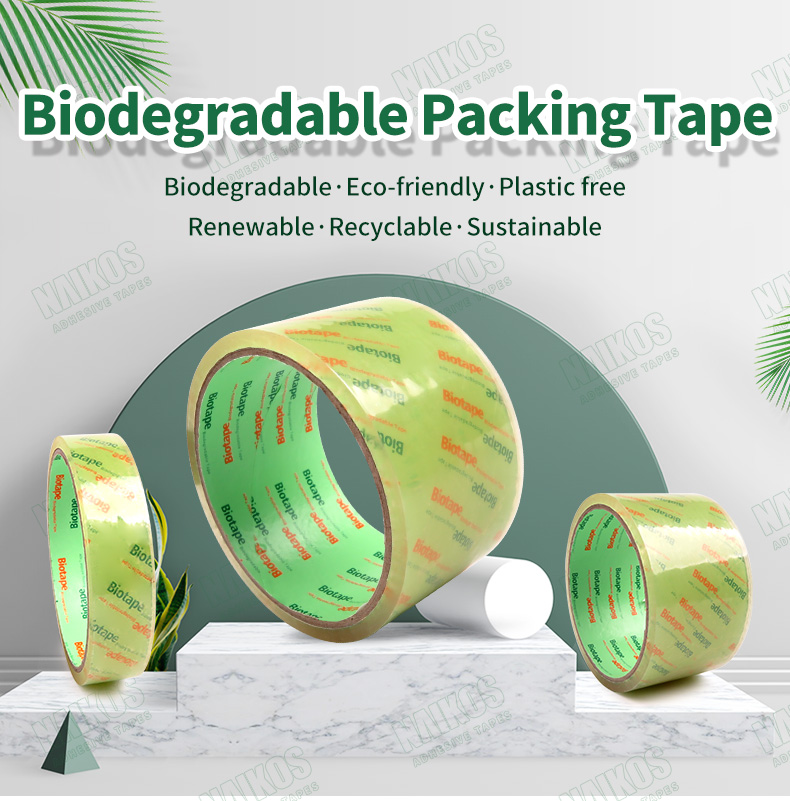
Custom Printing logo on Biodegradable Tape
Green Tape: Print Your Way to Eco-Friendly Packaging
Related Article
